

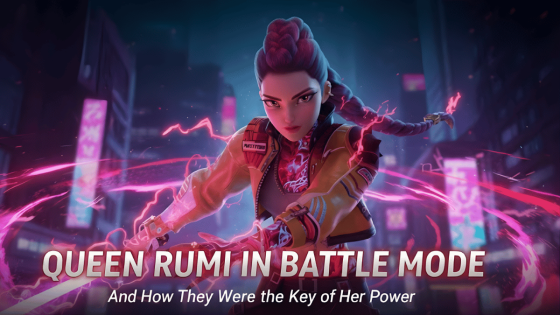
Rumi is not just the magnetic leader and main vocalist of Huntrix; she is the cosmic core of the KPop Demon Hunters universe. Her narrative arc, rooted in themes of dual identity, shame, and ultimate self-acceptance, culminates in one of the most iconic and visually explosive moments of the film: the “Queen Rumi in Battle Mode” transformation.
This article explores the deep thematic, mythological, and visual significance of the glowing demonic marks that appear on Rumi’s body in the climax. Far from being a mere visual effect, these markings are the absolute key to her unleashed power, her restored voice, and the destiny of the rumi zoey mira trio. We will dissect the Rites of Passage structure that defines Rumi’s journey, the mythological connection to the White Tiger, and how her own rumi song was weaponized for both shame and salvation.
1. Rumi’s Dual Identity: The Rites of Passage and the Problem of Shame
The foundational narrative of KPop Demon Hunters is categorized as a “Rites of Passage” story. This genre revolves around a hero facing a pervasive life problem—in Rumi’s case, the struggle to accept her mixed heritage as half-human and half-demon. This internal conflict is not abstract; it manifests physically as the intricate, dark patterns on her skin.
Thematic Premise: The Wrong Way to Heal
Rumi’s core “life problem” is universally relatable: she is ashamed of who she is, specifically the demonic patterns on her body. Her method for dealing with this shame—the “wrong way”—is concealment. She hides the marks from her closest friends, Mira and Zoey, following strict instructions from her guardian, Celine.
This act of concealment carries severe consequences. As Rumi’s shame grew and festered, her magnificent voice—the very source of her power to unite fans and maintain the Honmoon Shield—began to fail. Her fear was twofold: if she couldn’t sing, she couldn’t save the world; and if she revealed her truth, she risked losing her friends and her purpose. The fate of the golden honmoon (the ultimate goal of the Hunters) hinged entirely on Rumi’s ability to use her unifying voice, which she was actively destroying through avoidance.
The Catalyst: The Spread of the Patterns
The turning point occurs when the demonic patterns begin to spread to Rumi’s neck, making concealment nearly impossible. This escalation forces Rumi to confront the “trap”: choose between hiding the patterns and risking Gwi-Ma’s victory, or revealing her true nature and risking rejection.
This conflict is mirrored in the aggressive kpop demon hunters song lyrics of “Takedown,” a diss track against the Saja Boys. Rumi feels deeply uncomfortable with the song’s hate-filled tone because it is diametrically opposed to the film’s thematic premise: acceptance. The lyrics, which include phrases like, “I’ll crush you and carve it in” and “I’m here to end your soulless life and watch you die-ie-ie”, embody the wrong way of solving the problem—fighting and destroying—instead of uniting and accepting the “Dark and Light”.
2. The Aesthetics of Power: Decoding the Glowing Marks
The “Queen Rumi in Battle Mode” transformation is the visual manifestation of her internal breakthrough. The moment the patterns on her skin and clothing begin to glow, it signals the transition from avoidance to radical self-acceptance.
The Transformation: The Dark Night of the Soul
The shift begins during Rumi’s emotionally charged meeting with Jinu, the Saja Boys’ leader, who serves as the pivotal figure in her B Story. Jinu, haunted by 400 years of shame for abandoning his family, mirrors Rumi’s own internal conflict.
Rumi confesses to Jinu: “I spent my whole life hiding this secret, this shame of who I am… and the more I hid that shame, the more it grew and swelled until it started to destroy the one thing that gave me purpose: my voice”.
Crucially, she tells him that talking to him healed her voice. This dialogue confirms that the problem was not the demon heritage itself, but the shame of hiding it. This leads to the ultimate thematic declaration: “If this is the Honmoon I’m supposed to protect, I’m happy to see it destroyed.” Rumi accepts that she must embrace her true self for a new, stable Honmoon to be built.
The Visual Key: Acceptance and Synthesis
The moment Rumi accepts that the Dark and the Light must meet—and that the scars (the patterns) are now part of her identity—her power is unleashed. This acceptance triggers the visual transformation:
- Glowing Patterns: The formerly hidden, shameful demonic patterns ignite into bright, powerful glowing marks across her skin and limbs. This glow is the visual proof that her mixed heritage has become a source of strength, not a weakness. This iconic visual of the bright blade and confident smirk has made the “Queen Rumi in Battle Mode” scene one of the most downloaded kpop demon hunters wallpaper options.
- The Huntr/x Unit: The visual synthesis extends to her bandmates. In the final battle, Mira and Zoey’s jackets also acquire similar patterns to match Rumi’s skin. This symbolizes that Rumi’s acceptance of her whole self allowed the rumi zoey mira unit to become complete again, ready to fight as a cohesive force.
- The Four-Tiger Sword: Rumi’s primary weapon, the Four-Tiger Sword, is intrinsically linked to her identity as the White Tiger. When she fully embraces her power, the bright blade and the constellation patterns on the sword—which correspond to the Sky/Heaven Trigram on the South Korean flag—glow with cosmic energy, confirming her role as a universal defender.
The visual transformation is so striking that fan artists are constantly seeking color palette guides and tutorials on how to color Rumi Mira Zoey fanart, often focusing on the intense highlights and glows of this battle sequence.
3. The Power of the Voice: Rumi’s Songs as Plot Devices
In KPop Demon Hunters, music is not just a soundtrack; it is a character, driving both external conflict and Rumi’s internal struggle. Rumi’s songs track her personal growth, serving as mile markers in her Rites of Passage.
“Golden”: Shame, Secrets, and the Unattainable Standard
The song “Golden” serves two major thematic purposes: it introduces the Hunters’ “unattainable standards for themselves” and highlights Rumi’s deep shame about her demon heritage.
- The Unachievable Goal: The pursuit of the Golden Honmoon itself is an impossible standard, mirroring the pressure K-Pop idols face. This exterior pressure exacerbates Rumi’s internal conflict, making her feel that she must be “perfect” and purely human to achieve the goal.
- The Voice Failure: Rumi’s voice begins to fail precisely when she is about to perform “Golden” live, a direct consequence of her internal division. The song—meant to unite—temporarily exposes her weakness.
The Leit Motif and Acceptance: “What It Sounds Like”
The final battle is fought to the tune of “What It Sounds Like,” the song of Rumi’s ultimate self-acceptance. This is where the musical structure perfectly mirrors the narrative.
- Lyrical Breakthrough: The lyrics are a raw confession of Rumi’s journey from denial to acceptance: “I broke into a million pieces / And I can’t go back / But now I see all the beauty / In the broken glass / The scars are a part of me”. This final verse is the ultimate culmination of the Rites of Passage genre: the hero accepts the hard truth.
- The Musical Callback: During the part of “What It Sounds Like” where the crowd chants along, a subtle musical detail appears: a series of “Oh”s that uses the exact same melody from the song “Golden“. This is a technique called a Leit Motif. This musical callback is the final narrative proof: the melody that once represented shame and unattainable goals (Golden) is now reclaimed and used as the source of unity and power (What It Sounds Like).
This powerful synthesis of music and narrative confirms that Rumi’s demonic marks and her voice were not barriers, but two halves of the same complete power. The chorus, fueled by the united voices of the fans, finally defeats Gwi-Ma and strengthens the barrier.
4. Rumi’s Cosmic Role: The White Tiger and the Golden Honmoon
Rumi’s identity as a powerhouse is cemented in the deep Korean mythology woven into the fabric of KPop Demon Hunters. Her character is strongly linked to the White Tiger (Baekho), one of the Four Guardians (Four Symbols) in East Asian cosmology.
The Four Guardians Theory
The White Tiger is traditionally associated with the West and represents immense spiritual power and the element of Metal.
- Rumi (White Tiger): She is visually and narratively linked to the Tiger symbol, not just through her Four-Tiger Sword but also through the presence of Derpy the Tiger, a modern reinterpretation of the traditional Korean tiger character. Her sword further represents the Sky/Heaven Trigram.
- Zoey (Azure Dragon): Her six-bladed modified shinkal and hero pose mirror the clawed stance of the Azure Dragon. Her weapon corresponds to the Earth Trigram.
- Mira: Her Woldo polearm and ripple motifs reflect the Water Trigram.
This sophisticated use of mythology, known as the Four Guardians Theory, suggests that the entire architecture of the movie is built around achieving cosmic balance.
The Missing Piece: The Qilin and the Golden Motif
The film explicitly states that the ultimate goal of the Hunters is to create the Golden Honmoon—a permanent shield that closes the demonic doors forever. However, even after Huntrix wins and Rumi accepts herself, the Honmoon barrier never turns gold.
This is the biggest clue pointing to a sequel. The mythology suggests that the final, most powerful symbol is needed to achieve the “Golden” balance: the Qilin (or Kirin – 기린). The Qilin is a golden, hooved creature representing the center and ultimate cosmic harmony.
The Queen Rumi in Battle Mode transformation, with its intense gold and light aesthetics, is the closest Huntrix gets to achieving this golden status. The fact that the shield remains un-golden implies that Rumi’s power—though complete for her own journey—is still insufficient for the cosmic goal until the fourth piece (the Qilin, potentially a new character) is introduced and the rumi zoey mira dynamic expands.
5. Capturing the Power: KPop Demon Hunters Wallpapers and Aesthetics
Rumi’s final battle scene has become a massive draw for fans looking for high-quality visual content. The aesthetic qualities of her transformation are key to generating traffic for kpop demon hunters wallpaper and related merchandise searches.
High-Demand Visuals
The “Queen Rumi in Battle Mode” shot is a fan favorite for several reasons:
- Pure Power: The combination of the intense glow, the bright blade, and Rumi’s confident, determined expression encapsulates the moment of full empowerment.
- Contrasting Aesthetics: The scene perfectly blends the sleek, modern K-Pop aesthetic (golden-era outfits, performance style) with the raw, primal energy of the demonic tattoos and glowing weapons.
- Visual Reference: Fans creating rumi kpop demon hunters fan art or looking for rumi outfit and rumi wallpaper focus intensely on the Hex codes and color palettes used to create the glowing effect.
Conclusion: The Ultimate Triumph of Acceptance
The appearance of Rumi’s glowing demonic tattoos in the climax of KPop Demon Hunters is the single most important thematic event in the film. It represents the successful conclusion of her Rites of Passage journey—a powerful declaration that acceptance is the ultimate form of power.
By choosing to embrace her true, complete identity—the light and the dark—Rumi not only heals her voice and rescues her friends but also transforms the shameful marks into the glowing key to her true strength. This iconic visual moment, captured in the sought-after “Queen Rumi in Battle Mode” rumi wallpaper, is the enduring legacy of a hero who learned that the only way to save the world was to first save herself. The future of the Golden Honmoon now rests on the foundation of her self-love, awaiting the final piece of the cosmic puzzle.

روايات بدون إنترنت
اقرأ رواياتك المفضلة في أي وقت وأي مكان
هل أعجبتك هذه الرواية؟ يمكنك الآن الاستمتاع بقراءة هذه الرواية وآلاف الروايات الأخرى بدون إنترنت من خلال تطبيقنا المجاني!